PROPOSED PROJECT
Trailer Edit Suite
Help film teams find a trailer’s story across hours of footage. Search dialogue and scenes, leave out spoilers chosen by the team, and assemble editor-directed rough cuts with video timestamps, music notes, and versions at different lengths.
Keep the question. Leave out the answer.
Proposed 45-second cut
24 fps / source-linked selection
Departure
Someone signed this
after midnight.
Find the story
inside the footage.
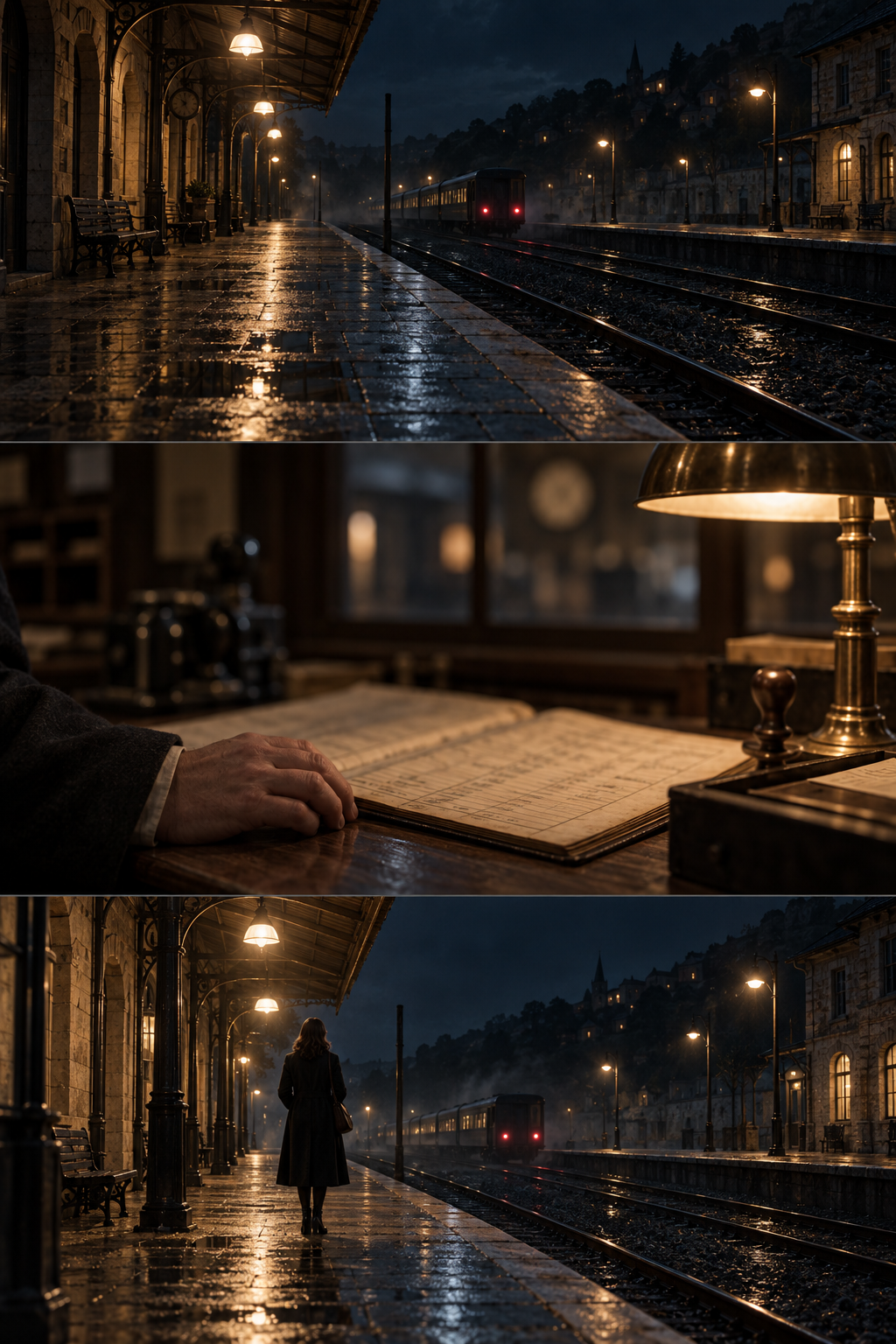
The fictional mystery The Last Departure needs a 45-second trailer that asks who signed a station ledger after midnight. Three permitted source ranges establish an empty platform, introduce the ledger, and show a waiting traveler. Scene N04 contains the answer and is excluded. The final seven seconds are reserved for the approved title and release card. The stills are generated source-frame examples; no real film, transcript, search, or video edit was processed.
WHAT IS USUALLY DONE
An editor searches a long cut by memory, replays dialogue, and copies promising moments into a separate sequence. Spoiler notes sit in another document. Each shorter version needs another pass through the same material, and a source reference can get lost when clips are moved.
WHAT SOVRUN CAN DO FOR YOU
Sovrun would build a trailer workspace around the team’s permitted footage, transcript, story brief, and spoiler exclusions. Editors search by dialogue and scene description, review candidate moments at their original timestamps, and choose the story beats. The system proposes timed rough cuts at the agreed lengths, keeps excluded material out, and returns editable sequences with source clips and music notes. The editor controls the narrative and finishes the picture and sound.
Every cut has a source.
Every second has a job.
The timeline below uses 24 fps source timing. Clip out-points are exclusive: the first range contains exactly ten seconds. The editor reviews the picture and sound together; the system keeps the chosen sources and excluded scene attached to every version.
Set the place
Station ambience. Let the empty platform breathe.
Ask the question
Reviewed line: “Someone signed this after midnight.”
Leave the answer open
Build a temporary pulse; cut it before the title.
Title + release card
Seven seconds for the approved title and release copy.
The reveal stays out of the 45-second and 15-second cuts. The source scene at 00:48:12:00–00:48:44:00 is blocked by the team’s brief.
A rough cut you can edit.
With the decisions still attached.
The proposed delivery includes editable rough cuts and a source-linked handoff. The boards below show planned outputs; they are not playable videos or claims of a completed production.
Pick up the cut. Keep the context.
- Timing
- 24 fps / exact source ranges
- Picture
- 3 clips + end card
- Sound
- Temporary cue marked
- Excluded
- N04 / reveal
How we’d make it happen.
Index the permitted source
Connect the footage, transcript, and spoiler list to the original files. Confirm frame rate and time references, then let editors correct the scene labels and transcript.
Find the story and shape the cut
Search dialogue and visual moments, review the candidates, and choose a sequence. Build rough cuts from approved ranges with proposed music and sound transitions.
Review every delivery version
Check exclusions, source accuracy, runtime, music, and release copy in each version. Hand off editable sequences for the editor’s final picture and sound work.
Where AI helps
Speech models create time-aligned transcript drafts; video-language models help describe shots and retrieve candidate scenes. A language model proposes story arrangements using only the editor’s permitted selections. Code checks source ranges, runtime, and the team’s excluded intervals. We compare retrieval and timing on the actual footage, preserving the source frame rate and file identifiers. This workflow assembles existing footage; it does not fabricate dialogue, actor performances, or scenes from the film.
What people approve
The director and distributor choose the permitted story points, excluded scenes, music, and release copy. Editors verify dialogue timing, shot boundaries, meaning across cuts, and final rhythm. A candidate transcript or scene label is reviewed before use. The rights team confirms footage, music, and talent permissions for each intended placement.
What we’d need to start
- Permitted film footage with stable file IDs, frame rates, and a reviewed transcript where available
- A trailer brief, explicit spoiler exclusions, approved release copy, and intended delivery lengths
- Cleared music or clearly marked temporary cues, editing software requirements, and director and distributor reviewers
How we’d test it
Have editors label useful moments for a set of actual trailer requests. Measure whether the right scenes appear near the top, whether source timestamps open the correct frames, and whether any excluded material enters a cut. Check durations at the source frame rate and review the story meaning with picture and sound together. Time savings and trailer performance require a measured pilot; a rough cut alone is not evidence of either.
Prepared for Media & entertainment. We would agree on the work after reviewing your brief, materials, and requirements.
This is a proposed project, not completed client work. The visuals and numbers show example outputs, not measured results.