PROPOSED PROJECT
Packhouse Quality Review
Give produce quality teams a review queue for incoming batch photos and inspection sheets. Suggest visible labels for visible defects against buyer grading guides, attach inspector-confirmed measurements, and assemble a batch report for the quality lead to approve.
A visible split. A traceable inspection.
Batch B24 / sheet Q20
Final grade pending
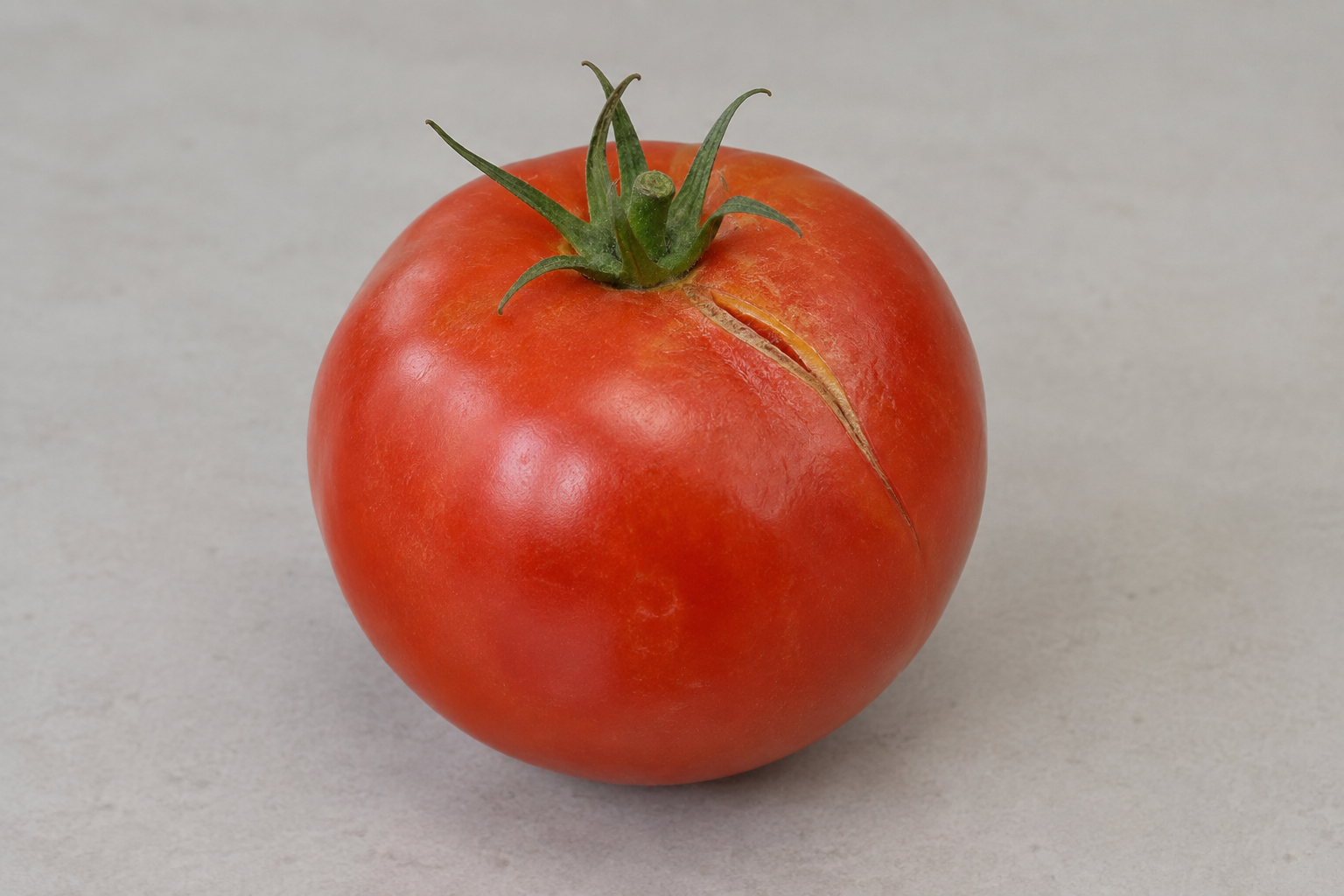 T07 / ILLUSTRATIVE SPECIMEN
Keep the observation
with its source.
- Model suggestion
- Visible split
- Inspector decision
- Split confirmed
- Diameter / sheet Q20
- 64 mm
- Firmness
- Not recorded
- Final buyer grade
- Pending
The diameter comes from the inspection sheet. It is not measured from this image.
The project in practice.
A fictional tomato batch has a 20-item inspection sheet: one inspector-confirmed split, two bruised items, and 17 with no visible defect recorded. An illustrative photo for item T07 shows a surface split. Its diameter of 64 mm comes from the inspector’s sheet, not image pixels. Firmness is not recorded. The review shows all 20 sample rows but leaves the final buyer grade and batch release pending.
WHAT IS USUALLY DONE
Inspectors sort batch photos and inspection sheets manually. A photo label can lose its item reference, and visible appearance may be confused with measurements or the final buyer grade.
WHAT SOVRUN CAN DO FOR YOU
Sovrun would build a produce-quality review queue that links batch images, inspection rows, and the designated buyer guide. Vision models suggest visible labels for inspectors to confirm or correct. The final report retains inspected counts, recorded measurements, unresolved checks, and the quality lead’s decision.
Twenty sample records.
One complete count.
The sheet uses mutually exclusive recorded categories: one split, two bruises, and 17 items with no visible defect recorded. These counts describe the inspected sample. They do not establish a defect rate for the full batch or confirm internal quality.
1 split · 2 bruised · 17 with no visible defect recorded
Appearance is only
part of the decision.
Firmness is missing. The quality lead must confirm the applicable buyer guide, sampling plan, and any required physical checks before assigning a final grade.
Batch release pendingIf a reviewer changes the suggested label, retain the photo, original suggestion, confirmed label, reviewer, and time. A photo without a reliable item ID stays outside the counted sample until its identity is resolved.
A review queue.
A defensible sample report.
The expected result connects a proposed visual label to the inspected item and the approved record. The quality team keeps responsibility for grading.
Split confirmed
Inspector record Q20 / row 7
1 split · 2 bruised · 17 with no visible defect recorded
Do not skip the open check.
- T07 diameter
- 64 mm / sheet Q20
- Firmness
- Not recorded
- Buyer grade
- Not assigned
- Batch release
- Pending quality lead
How we’d make it happen.
Connect photos to the inspected sample
Match batch and item IDs, inspection time, guide revision, and measurement rows. Keep photographs separate from measured attributes.
Review suggested visible labels
Inspectors confirm or correct the model’s suggestion using the actual item and grading guide. Record uncertain or unobserved properties.
Assemble the batch review
Reconcile sample counts, attach measurements and open checks, and route the report to the quality lead for the final decision.
Where AI helps
Vision models propose visible defect labels and point reviewers to the relevant image. Document models extract recorded measurements and sample identifiers. Code reconciles inspected-item counts; it does not infer firmness, internal condition, or batch-wide defect rates from a few photos.
What people approve
Inspectors confirm visible labels and record physical measurements. The quality lead applies the correct sampling and buyer grading rules, requests further checks if needed, and approves the batch report. The system does not release or reject produce automatically.
What we’d need to start
- Batch photos with item references and original inspection sheets
- Buyer grading guide, sampling plan, and required physical checks
- Inspector decisions, measurement units, and quality-lead ownership
How we’d test it
Test duplicated photos, wrong batch references, ambiguous surface marks, missing measurements, and conflicting inspector labels. Verify that sample counts reconcile without claiming they describe every item in the lot. A photo suggestion cannot set the final grade or release the batch.
Prepared for Agriculture & food systems. We would agree on the work after reviewing your brief, materials, and requirements.
This is a proposed project, not completed client work. The visuals and numbers show example outputs, not measured results.