PROPOSED PROJECT
Game Dialogue Translation
Translate a game’s conversations while keeping the character, story progress, and previous lines in view. Use the studio’s story glossary and licensed voices to create reviewed audio and subtitles, then check their timing inside the game.
Same character. Same story. A line that fits.
Mara / MAR-010
Before the harbor gate opens
“Lleva el farol al Faro Norte.”MAR-010 / native-language review pending
Translate the moment.
Keep the story around it.
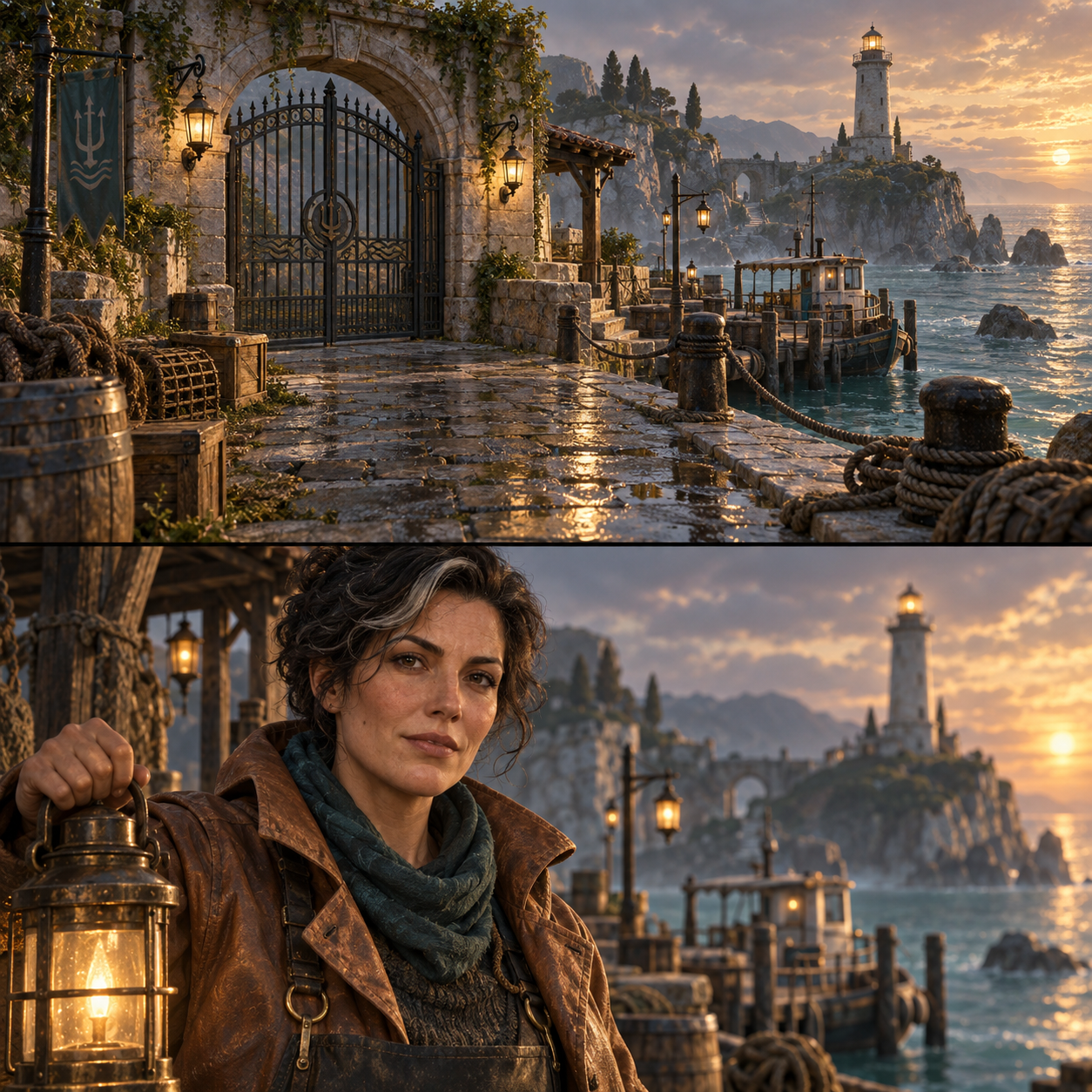
Tidekeeper’s harbor keeper Mara gives an instruction before the gate opens. English line MAR-010 says “Take this lantern to the North Beacon.” The supplied Spanish glossary fixes North Beacon as Faro Norte. An illustrative first draft takes 4.8 seconds against a 4.2-second slot. A shorter candidate takes 3.7 seconds and still needs native-language approval. MAR-023 belongs after the gate opens and must retain [player_name]. The art, dialogue, voice records, and duration figures are fictional; no audio was generated or tested in a game.
WHAT IS USUALLY DONE
A translator receives dialogue rows without the previous line, speaker intent, or condition that makes each line play. A translation can sound right on its own yet reveal a later story event or exceed the available voice slot. Audio and subtitle files then drift away from the approved script.
WHAT SOVRUN CAN DO FOR YOU
Sovrun would build a dialogue production workflow that carries each line’s speaker, previous exchange, story condition, glossary terms, and timing into translation. Language models propose drafts; native-language reviewers approve meaning and character voice. Licensed synthetic voices produce review takes, and the team checks duration, subtitles, pronunciation, and branch behavior in the game before exporting the approved files.
The glossary stays.
The delivery gets shorter.
The first draft exceeds the available slot. A shorter candidate preserves the destination and instruction; reviewers still need to check meaning, tone, pronunciation, and the actual spoken take. The figures below are illustrative durations, not audio measurements.
“Take this lantern to the North Beacon.”
- Speaker
- Mara / harbor keeper
- Previous line
- Player asks where to go
- Story state
- Before gate opens
- Glossary
- Faro Norte / approved name
Lleva este farol hasta el Faro Norte.
4.8s / exceeds slotLleva el farol al Faro Norte.
3.7s / timing fitsTiming fit does not mean language approval.
4.2 seconds available.
The line is rewritten and reviewed, rather than rushed to make it fit.
Before the gate opens
gate_open = false“Lleva el farol al Faro Norte.”
Keep the approved place name: Faro Norte.After the gate opens
gate_open = true“Gracias, [player_name]. El ferry puede salir.”
Keep [player_name] unchanged for the game to replace.Text, voice, and subtitles.
Still tied to the same line.
The proposed delivery covers an agreed dialogue scene, language, and licensed voice. Audio and subtitle files would be produced and checked in the actual build after the translation is approved.
Lleva el farol al Faro Norte.
- Term
- Faro Norte
- Condition
- Gate not open
- Language review
- Pending
- Slot
- 4.2 seconds
- Voice
- Licensed Spanish option
- Audio
- Not generated in demo
Check both branches.
- MAR-010 before gate opens
- MAR-023 after gate opens
- [player_name] preserved
- Subtitles readable in game
How we’d make it happen.
Bring the story into each line
Attach the speaker, previous exchange, glossary, story conditions, and available time. Preserve line IDs and dynamic text markers before drafting.
Translate, voice, and review
Draft alternatives, review meaning with native speakers, and synthesize permitted voice takes. Adjust the wording when timing does not fit, then review it again.
Check the line inside the game
Import the approved text and audio into the agreed build. Verify branch conditions, subtitles, pronunciation, and timing before the final export is accepted.
Where AI helps
Language models draft context-aware translations against the studio’s glossary and story-state records. Licensed speech synthesis produces review audio only from permitted voices. Automated checks compare line IDs, required terms, dynamic text markers, file versions, and durations. We evaluate multiple drafts rather than force a long take into a short slot by extreme speed changes; final meaning and voice performance remain human decisions.
What people approve
Native-language editors approve the translation, pronunciation, and character tone. Narrative staff confirm story conditions and exclusions. Audio staff verify voice permissions, timing, levels, and delivery files. Testers play each relevant branch in the actual build and check subtitles at the intended display size. No actor’s voice is cloned without explicit permission.
What we’d need to start
- Dialogue rows with stable IDs, speaker notes, story conditions, previous lines, and timing limits
- The approved story glossary, target languages, dynamic text markers, and permitted voice options
- A test build, subtitle requirements, export format, and native-language, narrative, and audio reviewers
How we’d test it
Test lines that depend on earlier choices, glossary terms that resemble ordinary words, dynamic names, and tight voice slots. Verify ID and marker preservation, meaning, pronunciation, and subtitle readability with native reviewers. Check the line in the correct story branch rather than approving it from a spreadsheet alone. Any reported production improvement needs a measured comparison with the existing workflow.
Prepared for Gaming & esports. We would agree on the work after reviewing your brief, materials, and requirements.
This is a proposed project, not completed client work. The visuals and numbers show example outputs, not measured results.