PROPOSED PROJECT
Virtual Try-On Studio
Let shoppers preview selected clothes on a photo they choose to upload. Use AI guided by the actual garment images, and test whether prints, logos, and shapes stay accurate. The preview shows a possible look; it does not promise an exact fit.
The look is only half the test.
Jacket J01 / draft review
A personal preview.
The same actual product.
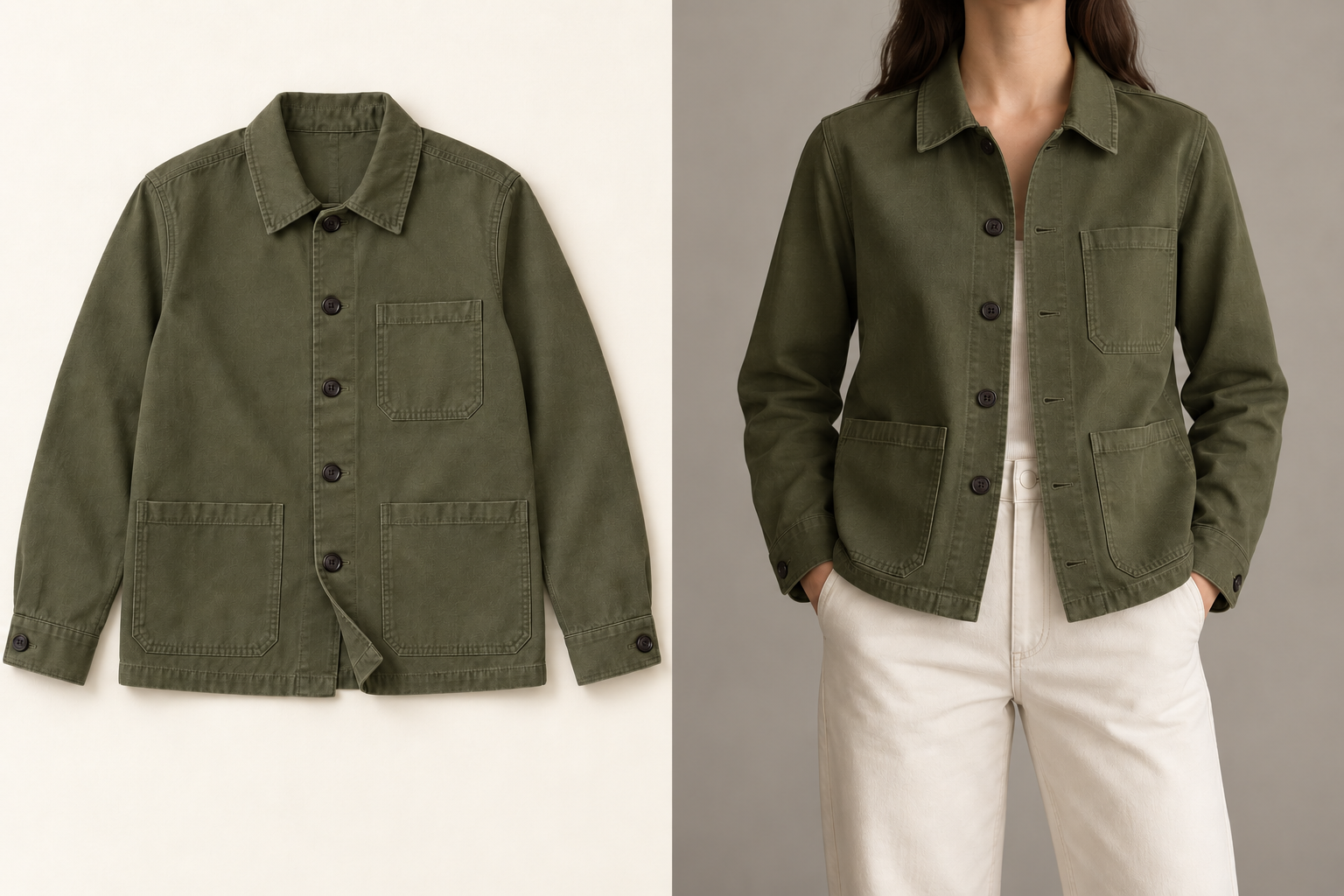
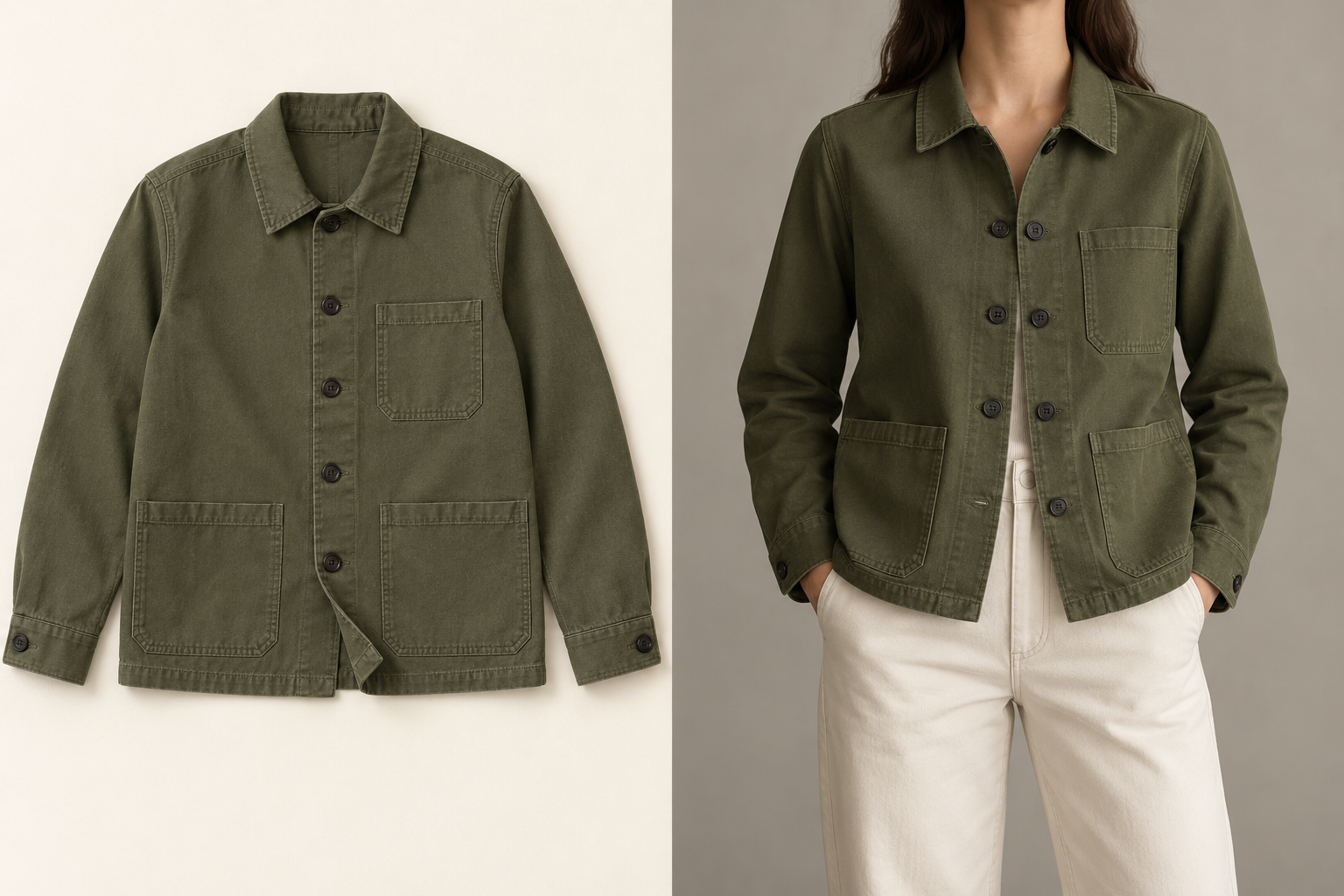
A fictional olive chore jacket is shown as a product view and a revised synthetic worn draft. The first draft duplicated the front buttons; a second image removes the extra row. Both versions stay in the study so reviewers can see the correction and recheck the full garment. All panels are generated concepts, not a live try-on result or a real shopper. Fit accuracy is not established.
WHAT IS USUALLY DONE
A shopper sees a garment on one studio model and has to imagine it in their own wardrobe. Simple overlays can ignore how sleeves, pockets, and closures behave. A convincing image can still change the product or imply a fit that has never been measured.
WHAT SOVRUN CAN DO FOR YOU
Sovrun would build a consent-based try-on experience for a selected garment range, using shopper-uploaded photos and designated product images. We would test current image models against difficult garment details, reject outputs that alter the product, and keep an ordinary product view available. The first release would cover garments and photo conditions that pass a defined review, with deletion controls and a clear distinction between a visual preview and a fit recommendation.
Inspect the garment,
not just the overall image.
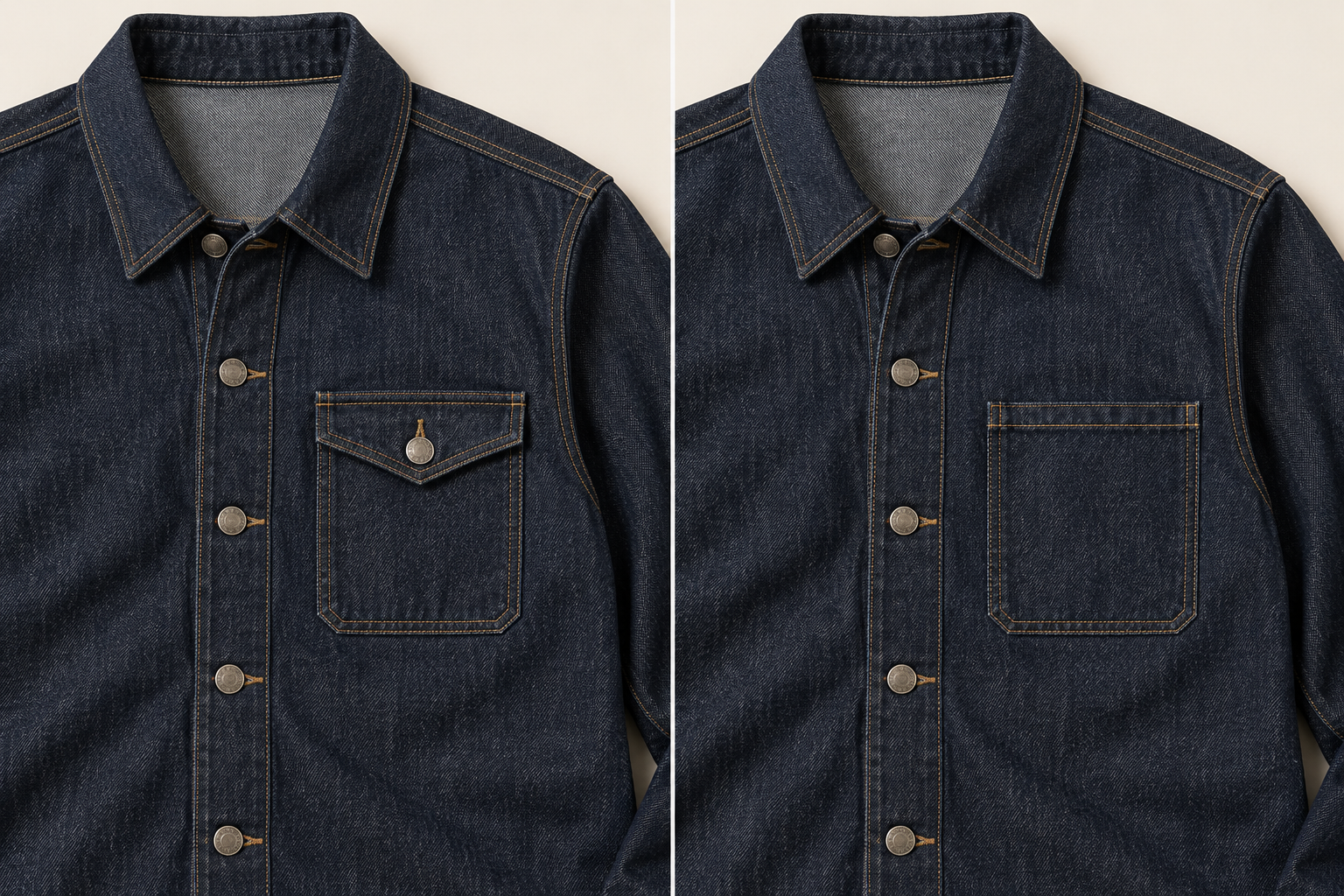
A plausible-looking jacket is not enough. Reviewers compare the construction details with designated product references before an output can be accepted.
Three pockets remain recognizable.
One chest pocket and two lower pockets are visible in both panels. Their proportions still need a full-size reference check.
The duplicated button row was corrected.
The first draft added a second button row. The revised illustration removes it. Keep both versions in the review record and inspect every detail again before acceptance.
A picture cannot verify either.
The preview shows a possible look. Actual measurements, garment construction, and the shopper’s fit preferences require separate size guidance.
A reviewed experience.
A product you can recognize.
Start with a selected garment range and consented adult test photos. These are proposed deliverables; acceptance depends on product fidelity and the agreed privacy controls.
J01 / revised draft, review pendingKeep the failed details.
- Pocket layout
- Visible / review proportions
- Front buttons
- Row corrected / recheck
- Fit accuracy
- Not established
Ready means reviewed.
- Input
- Opt-in adult photo
- Scope
- Approved garment range
- Retention
- Agreed deletion rule
- Release
- Fidelity checks pending
How we’d make it happen.
Choose a narrow garment test
Collect front, back, and detail references and consented adult photos. Agree which garment types and input conditions the first release can support.
Test the details that matter
Compare candidate models and settings against the same references. Inspect closures, prints, seams, garment shape, and person preservation; reject changed details.
Build the reviewed experience
Connect the accepted workflow to a prototype with clear waiting, retry, deletion, and unsupported-input states. Approve the release against the original test set.
Where AI helps
Image models generate a possible worn view using the permitted person photo and garment references. Vision checks can flag altered prints, missing closures, and broken shapes; they do not prove fit or replace visual review. We benchmark models on the actual garment range and keep generation settings, failures, and review records attached.
What people approve
People approve consent, acceptable photo inputs, garment fidelity, and release criteria. Reviewers reject wrong details even if the image looks attractive. The label controls product descriptions and size advice. A generated view cannot establish comfort, measurements, or how a garment will fit a particular body.
What we’d need to start
- Approved garment photographs, detail views, SKU records, and usage rights
- Opt-in adult test photos with consent and agreed retention and deletion rules
- Supported garment categories, fidelity checklist, reviewers, and the intended storefront
How we’d test it
Use held-out garment/photo pairs and inspect product details at full size. Record changed-button, print, shape, and person errors, rejected outputs, processing time, and deletion behavior. Confirm that users understand the image is a visual preview, not an exact-fit promise.
Prepared for Fashion & lifestyle. We would agree on the work after reviewing your brief, materials, and requirements.
This is a proposed project, not completed client work. The visuals and numbers show example outputs, not measured results.